Get Healthy!
- Posted December 30, 2025
Study Finds Wildfire Smoke Releases More Harmful Gases Than Expected
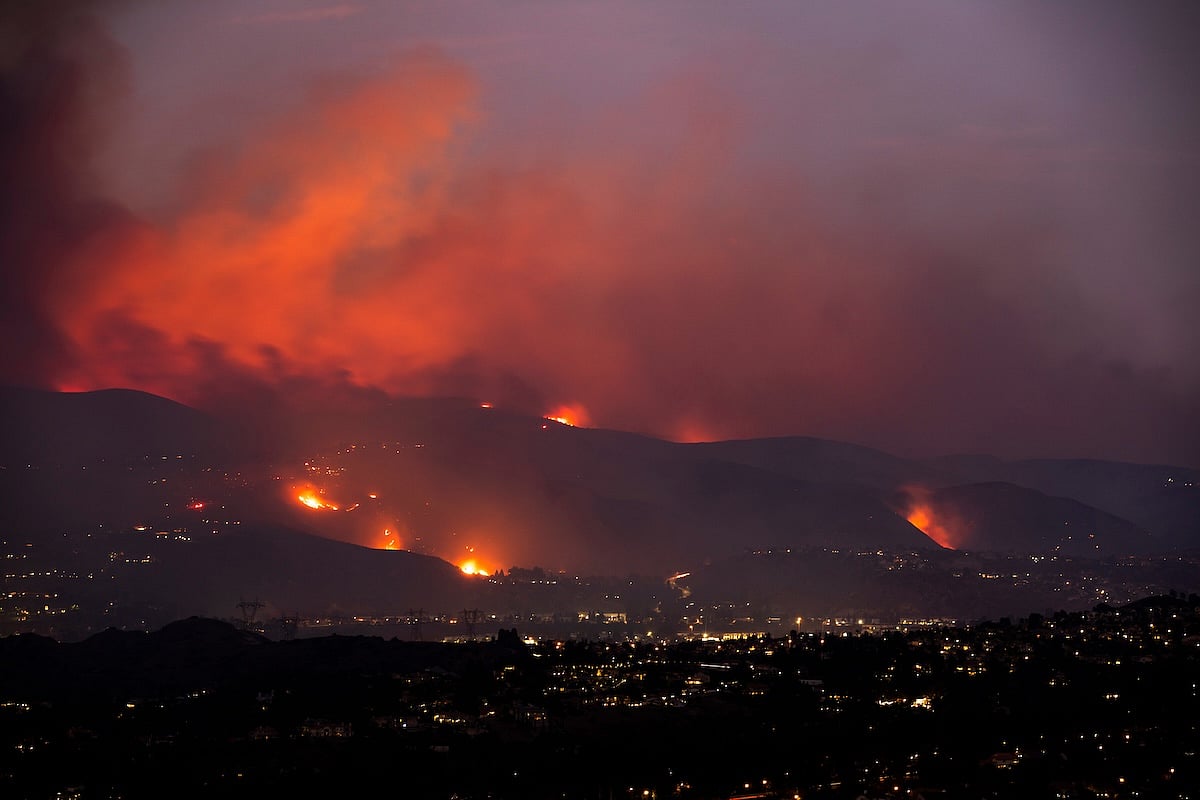
Wildfires may be sending far more harmful pollution into the air than scientists once believed, according to new research.
A study published Dec. 29 in Environmental Science & Technology, a journal of the American Chemical Society, found that wildfires and prescribed burns release more air-polluting gases than earlier estimates suggested.
“Our new estimates increase the organic compound emissions from wildland fires by about 21%,” first author Lyuyin Huang said in a news release.
“The inventory provides a foundation for more detailed air-quality modeling, health-risk assessment and climate-related policy analysis," added Huang, of Tsinghua University in Beijing.
When forests, grasslands and peatlands burn, they release a mix of smoke, ash and gases into the air.
Some of these gases, called volatile organic compounds, were already known to harm air quality. But the new study focused on less-studied gases known as intermediate- and semi-volatile organic compounds, which more easily turn into fine particles that can damage the lungs when inhaled.
These compounds are often left out of wildfire pollution estimates because they are hard to measure, researchers explained.
To better understand their impact, a team led by Shuxiao Wang of the Division of Air Pollution and Control at Tsinghua University analyzed data on burned land across forests, grasslands and peatlands worldwide from 1997 to 2023.
The researchers also examined measurements from field studies and lab experiments to estimate how many organic gases different vegetation types release when they burn.
Using this information, the team calculated global wildfire emissions year by year.
The researchers estimated that wildland fires released an average 143 million tons of airborne organic compounds each year during the study period.
That's 21% higher than previous estimates.
The study also identified major pollution hotspots where wildfire smoke and human activity overlap, including Equatorial Asia, Northern Africa and Southeast Asia.
Researchers said these regions face notably complex air-quality challenges that will require different strategies to reduce pollution from both fires and human activities.
More information
The U.S. Environmental Protection Agency has more on how wildfires can affect our health.
SOURCE: American Chemical Society, news release, Dec. 22, 2025
